Athletic Training EMR
Athletic Training EMR: What It Is, Features, Pricing, and How to Choose the Right One
What Is an Athletic Training EMR?
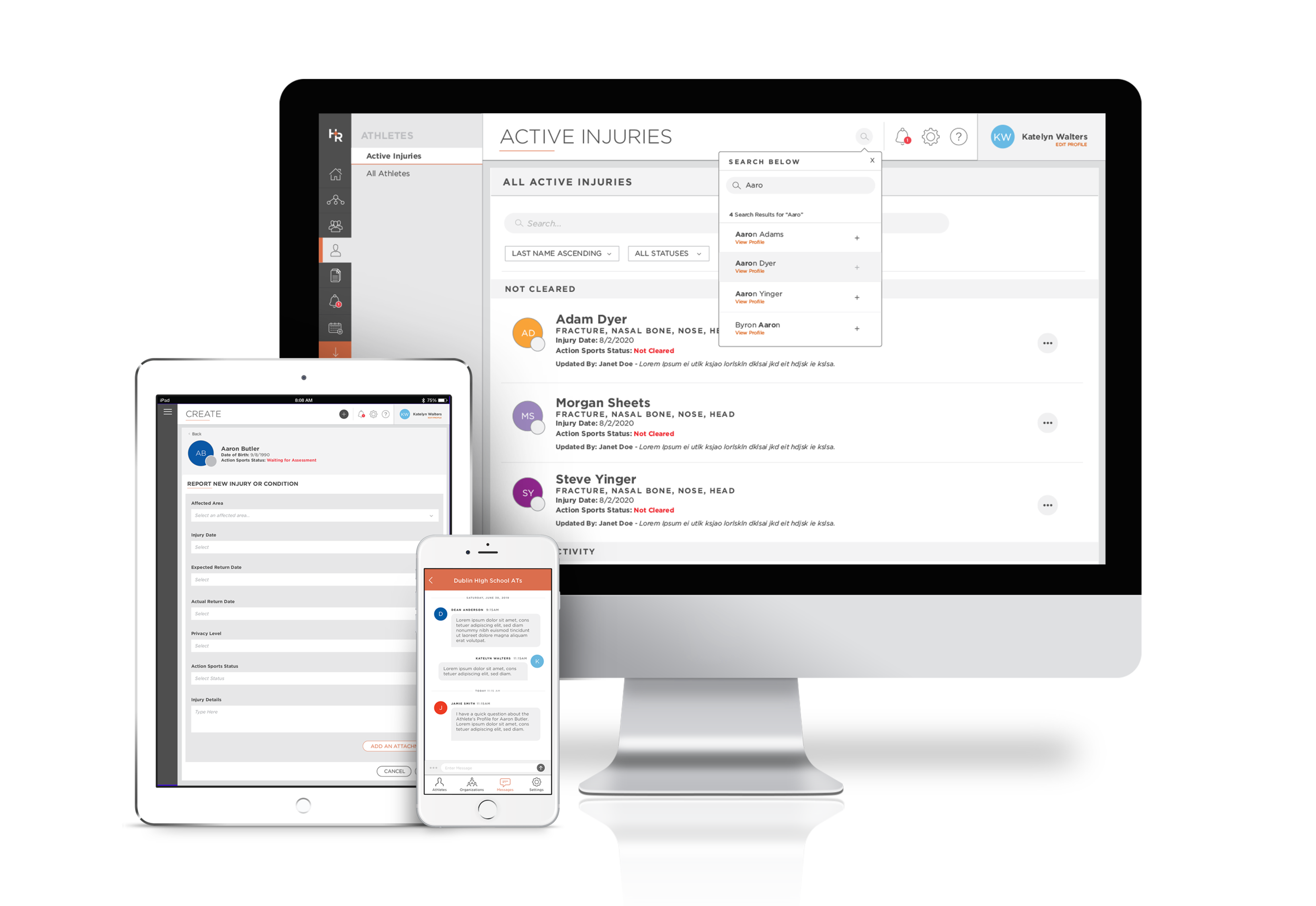
An Athletic Training EMR (Electronic Medical Record) is a digital system designed specifically for Athletic Trainers to document injuries, track treatments, communicate with athletes and staff, and maintain compliant medical records.
Unlike general healthcare EMRs, athletic training EMRs are built for the unique workflows of sports medicine, including sideline evaluations, daily treatments, return-to-play tracking, and communication with coaches, parents, and administrators.
Who Uses Athletic Training EMR Software?
Athletic training EMRs are used across a variety of settings, including:
High schools managing student-athlete health and communication
Colleges and universities supporting multiple teams and staff
Clinics providing outreach athletic training services
Industrial and tactical settings focused on workforce health
Each setting has different needs, but all rely on efficient documentation, clear communication, and accurate injury tracking.
Key Features of Athletic Training EMR Software
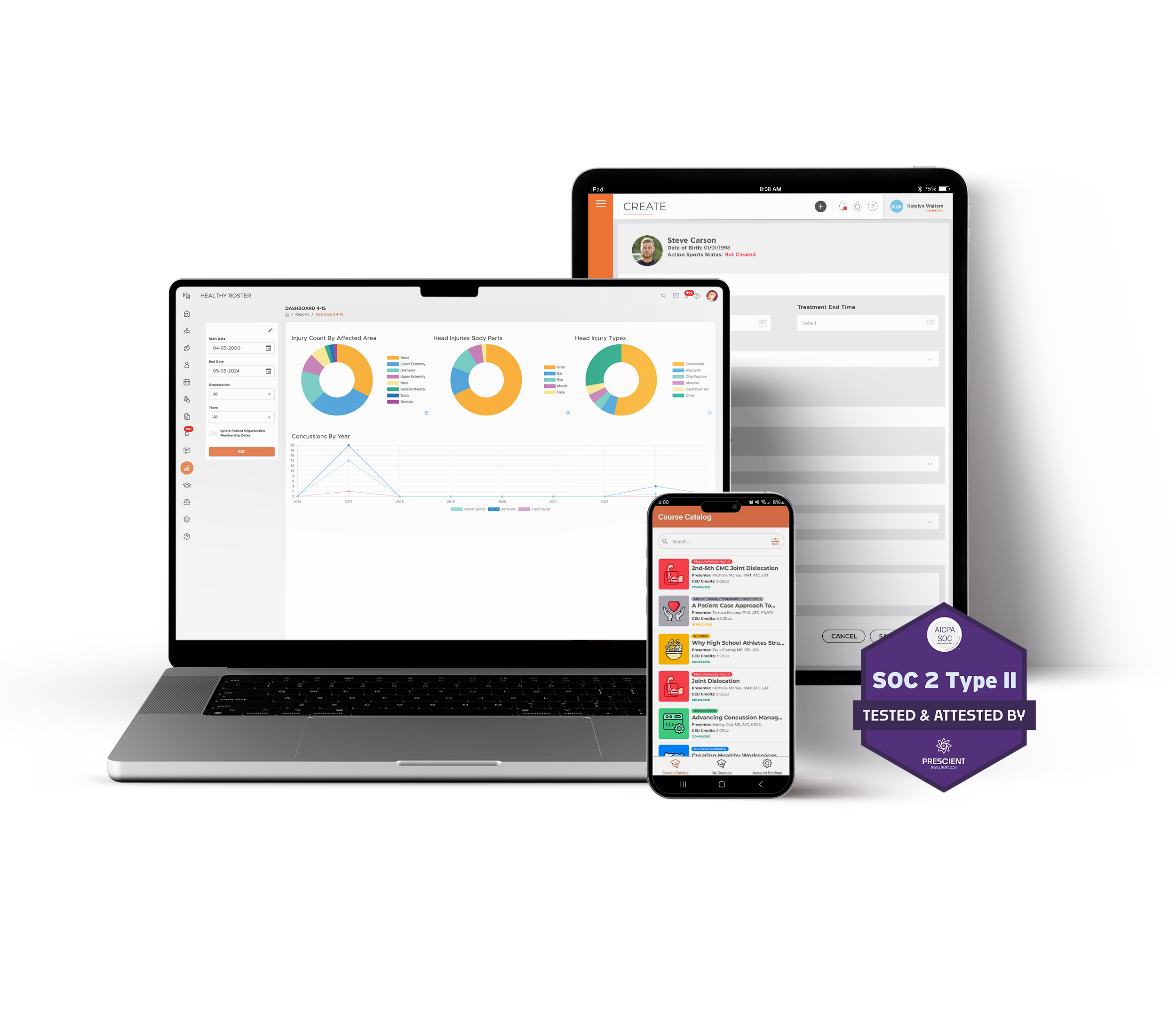
When evaluating an EMR for Athletic Trainers, there are several core features to look for:
Injury and Treatment Documentation
Track injuries, treatments, and progress over time in one centralized system.
Mobile Access
Document injuries and treatments directly from the field, training room, or anywhere you are working.
Communication Tools
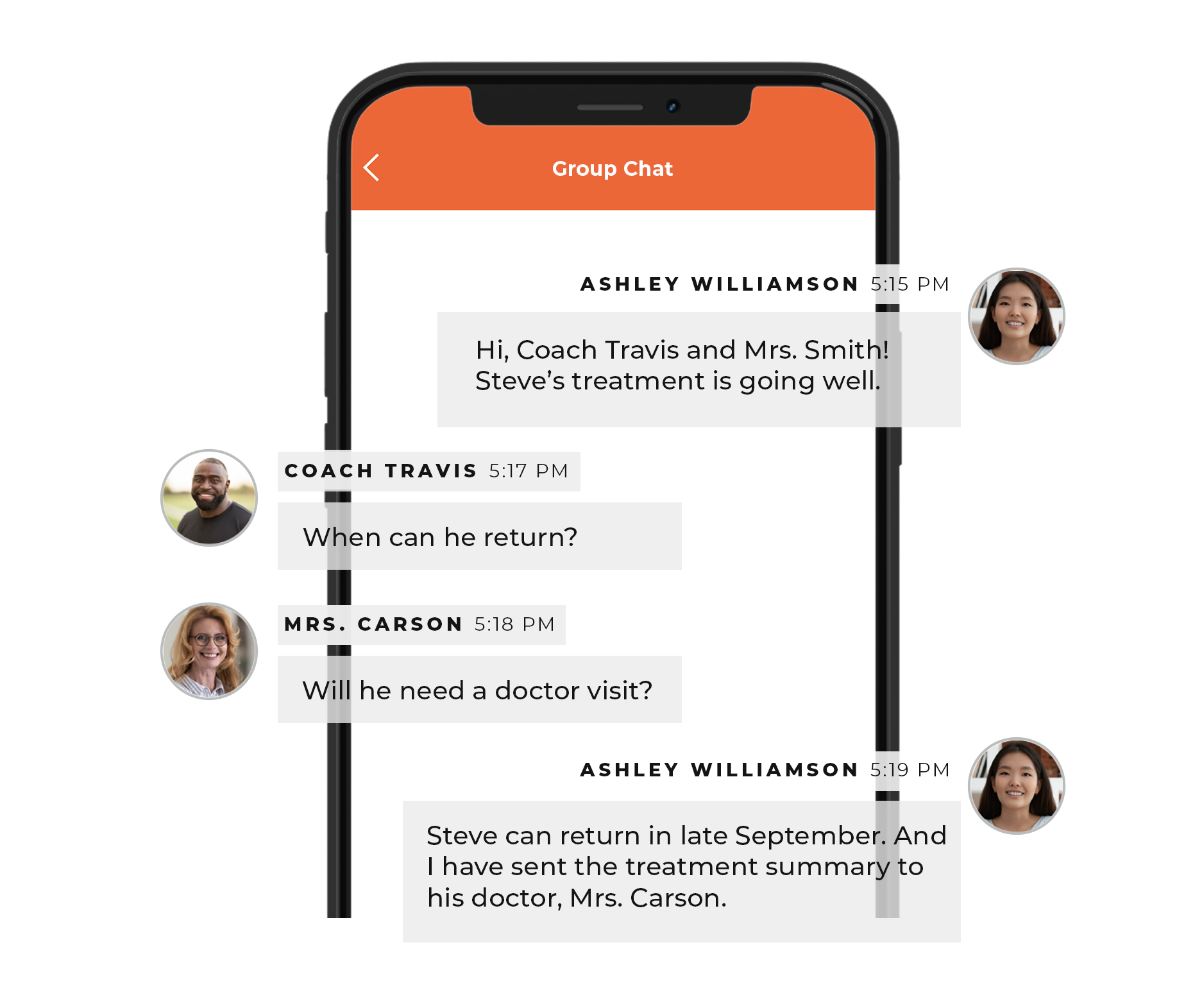
Securely communicate with athletes, parents, coaches, and other healthcare providers without relying on personal devices.
Reporting and Compliance
Generate reports for administrators and ensure documentation supports compliance requirements.
Scheduling and Workflow Management
Organize treatments, track daily activity, and manage athlete care efficiently.
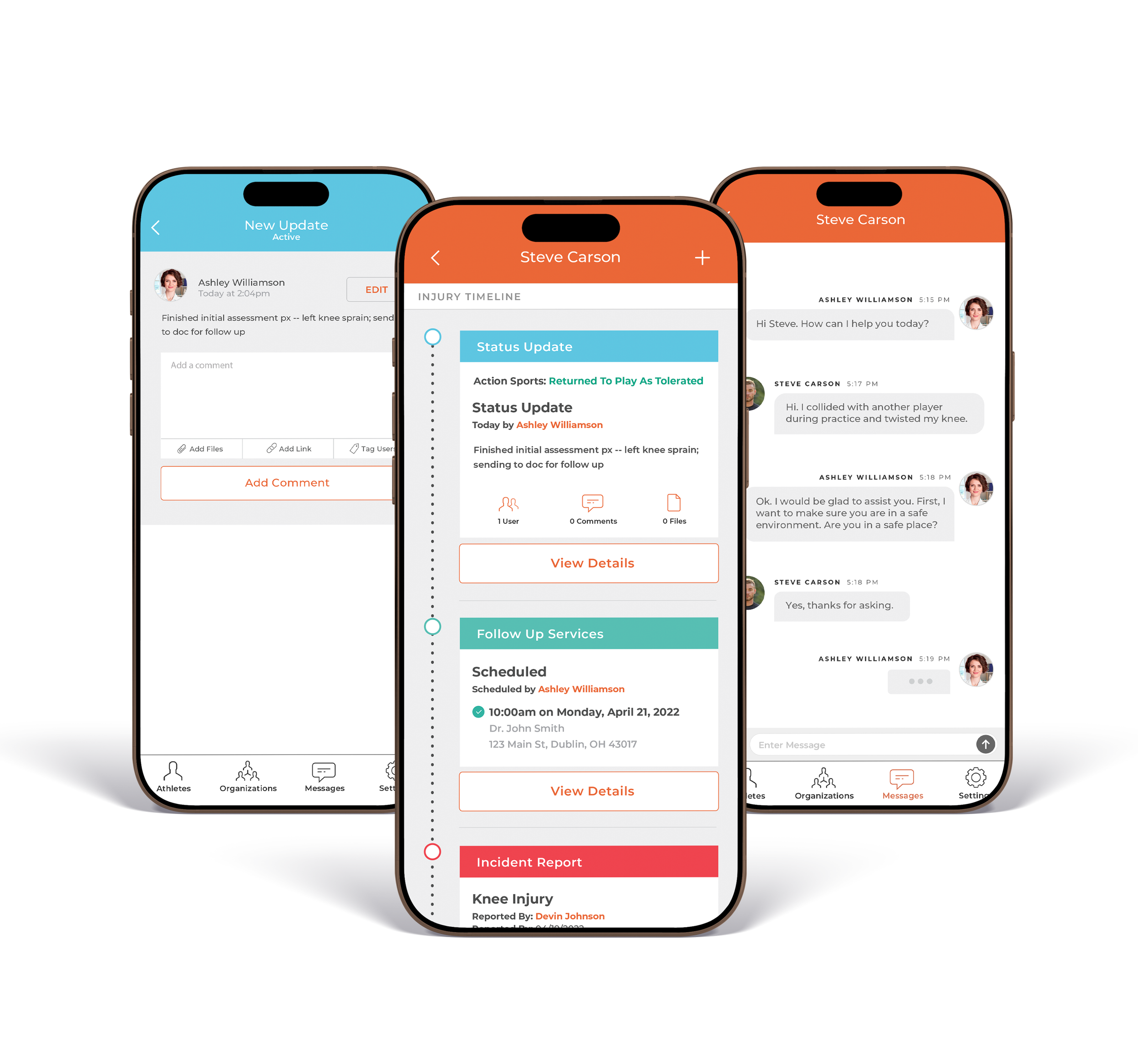
Example of an Athletic Training EMR used for documenting injuries and treatments

Benefits of Using an Athletic Training EMR
Save Time on Documentation
Athletic Trainers often spend hours each week on paperwork. A well-designed EMR reduces duplicate entry and streamlines workflows.
Improve Communication
Keep everyone informed with secure, centralized communication instead of texts, emails, or paper notes.
Strengthen Documentation and Protection
Detailed, consistent records help protect both the athlete and the Athletic Trainer.
Stay Organized
All athlete health information is stored in one place, making it easier to access and manage.
How Much Does Athletic Training EMR Software Cost?
Pricing for athletic training EMRs can vary based on several factors, including:
Number of athletes or users
Level of features and customization
Type of organization (high school, college, secondary school, clinic, pro sports)
Support and onboarding
Common Pricing Models
Description
Flat annual cost based on program size
Pricing based on number of Athletic Trainers or staff
Different levels based on features and usage
Tailored pricing based on needs and scale
Pricing Model
Per School / Organization
Per User
Tiered Plans
Custom Pricing
What to Expect
Most athletic training EMR solutions are designed to be significantly more affordable than traditional hospital-based EMRs, while still providing the tools needed for sports medicine workflows.
When evaluating cost, it’s important to consider not just price, but also time savings, communication improvements, and risk reduction.
Athletic Training EMR vs General EMR (Epic, Cerner, etc.)
General EMR
Built for clinical or hospital settings
Often desktop-focused
Focused on diagnoses and billing
Designed for individual patients
Athletic Training EMR
Built for sports medicine workflows
Mobile-first, field-ready
Includes injury and treatment tracking
Designed for teams and athletes
What to Look for in an Athletic Training EMR
Choosing the right EMR comes down to your specific needs, but here are key factors to consider:
Ease of Use
If the system is difficult to use, it won’t save time.
Mobile Functionality
You should be able to document quickly from anywhere—not just at a desk.
Communication Capabilities
Built-in communication tools help eliminate the need for personal texting or email.
Customization
Your workflows are unique. The system should adapt to you—not the other way around.
Support and Onboarding
A strong support team can make implementation significantly smoother.
5 Questions to Ask Before Choosing an EMR
Can I document injuries and treatments quickly from my phone?
Does this system improve communication with athletes, parents, and coaches?
Will this save me time each day or add more work?
Does it meet compliance and documentation requirements?
Is it built specifically for Athletic Trainers, or adapted from another industry?
Why Athletic Trainers Are Moving Away from Paper and Spreadsheets
Many programs still rely on paper forms or spreadsheets, but these systems create challenges:
Lost or incomplete records
Time-consuming manual entry
Limited visibility for coaches and administrators
Increased risk from inconsistent documentation
A modern EMR provides structure, consistency, and efficiency that manual systems cannot match.
Choosing the Right Athletic Training EMR
The best EMR is the one that fits your workflow, saves you time, and helps you deliver better care to your athletes.
For Athletic Trainers, that means choosing a solution that is:
Built specifically for sports medicine
Easy to use in real-world settings
Designed to improve both documentation and communication
Learn More About
Healthy Roster
Healthy Roster is a mobile-first EMR built specifically for Athletic Trainers, designed to simplify documentation, improve communication, and help you stay organized—whether you’re on the field, in the training room, or on the go.
If you’re evaluating EMR options, the next step is to see how a system works in real-world use.