Athletic Training EMR FAQ: Pricing, Features, and What to Know
Athletic Training EMR FAQ: Pricing, Features, and What to Know
What is an Athletic Training EMR?
An Athletic Training EMR is a digital system designed specifically for Athletic Trainers to document injuries, track treatments, manage athlete health records, and communicate with athletes, parents, and staff. It replaces paper records and spreadsheets with a centralized, organized system.
Athletic Training EMR FAQ
How is an Athletic Training EMR different from a general EMR?
Athletic Training EMRs are built for sports medicine workflows, including sideline evaluations, daily treatments, and return-to-play tracking. General EMRs are designed for clinics or hospitals and often do not support the fast-paced, mobile needs of Athletic Trainers.
How much does an Athletic Training EMR cost?
Athletic Training EMR pricing varies depending on the size of the program, number of users, and features needed. Most systems offer annual or subscription-based pricing, often at a lower cost than traditional medical EMRs. The best way to understand pricing is to evaluate what features and support your program needs.
What factors affect the cost of an EMR?
The cost of an Athletic Training EMR is typically influenced by the number of athletes, number of staff users, level of customization, reporting needs, and onboarding or support services. Some platforms offer tiered pricing, while others provide custom pricing based on your program.
Is an Athletic Training EMR worth the cost?
For most programs, an EMR saves significant time on documentation, improves communication, and reduces risk through better record-keeping. When considering cost, it’s important to weigh the time saved and improved efficiency against the price of the system.
Can I use an Athletic Training EMR on my phone?
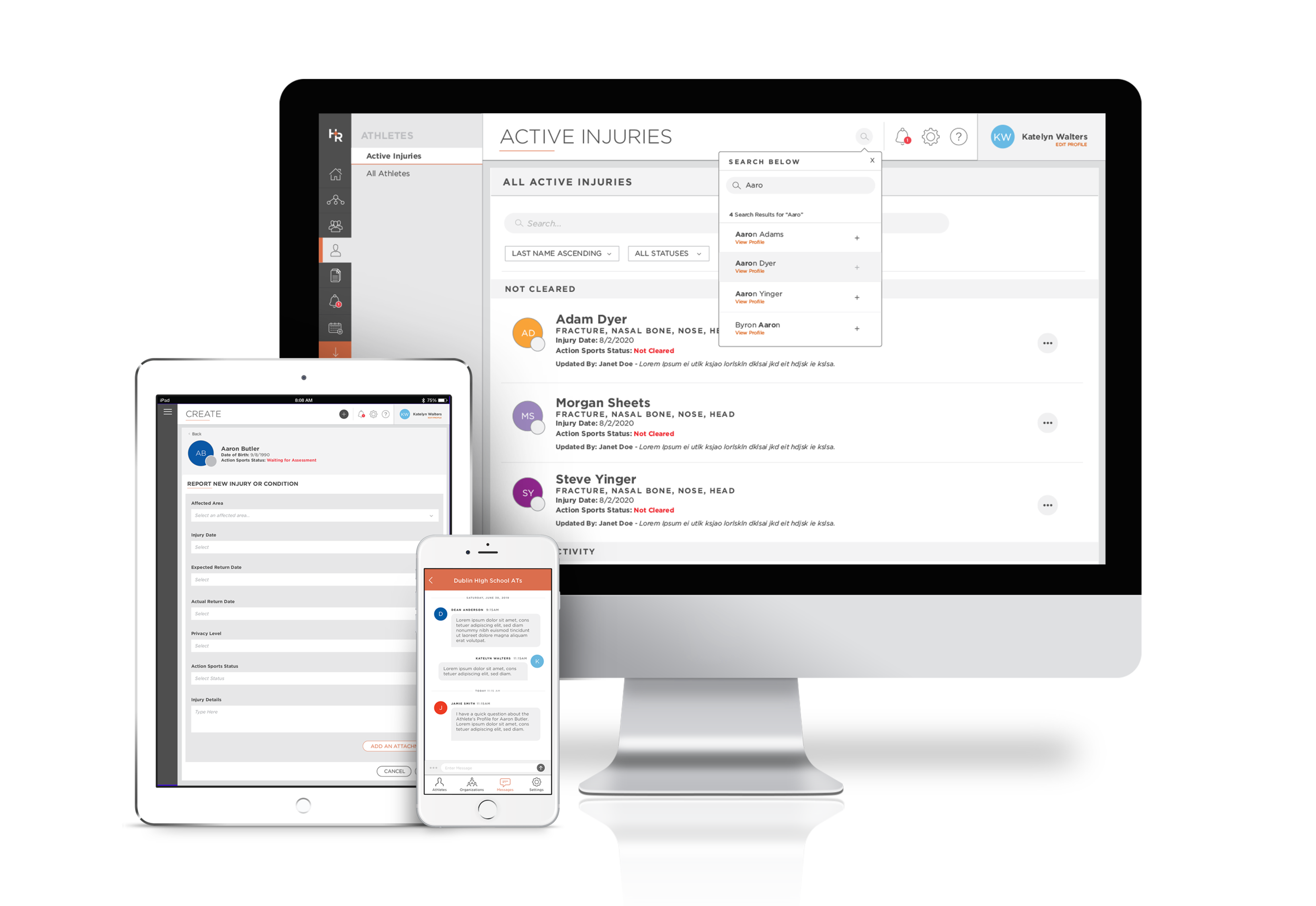
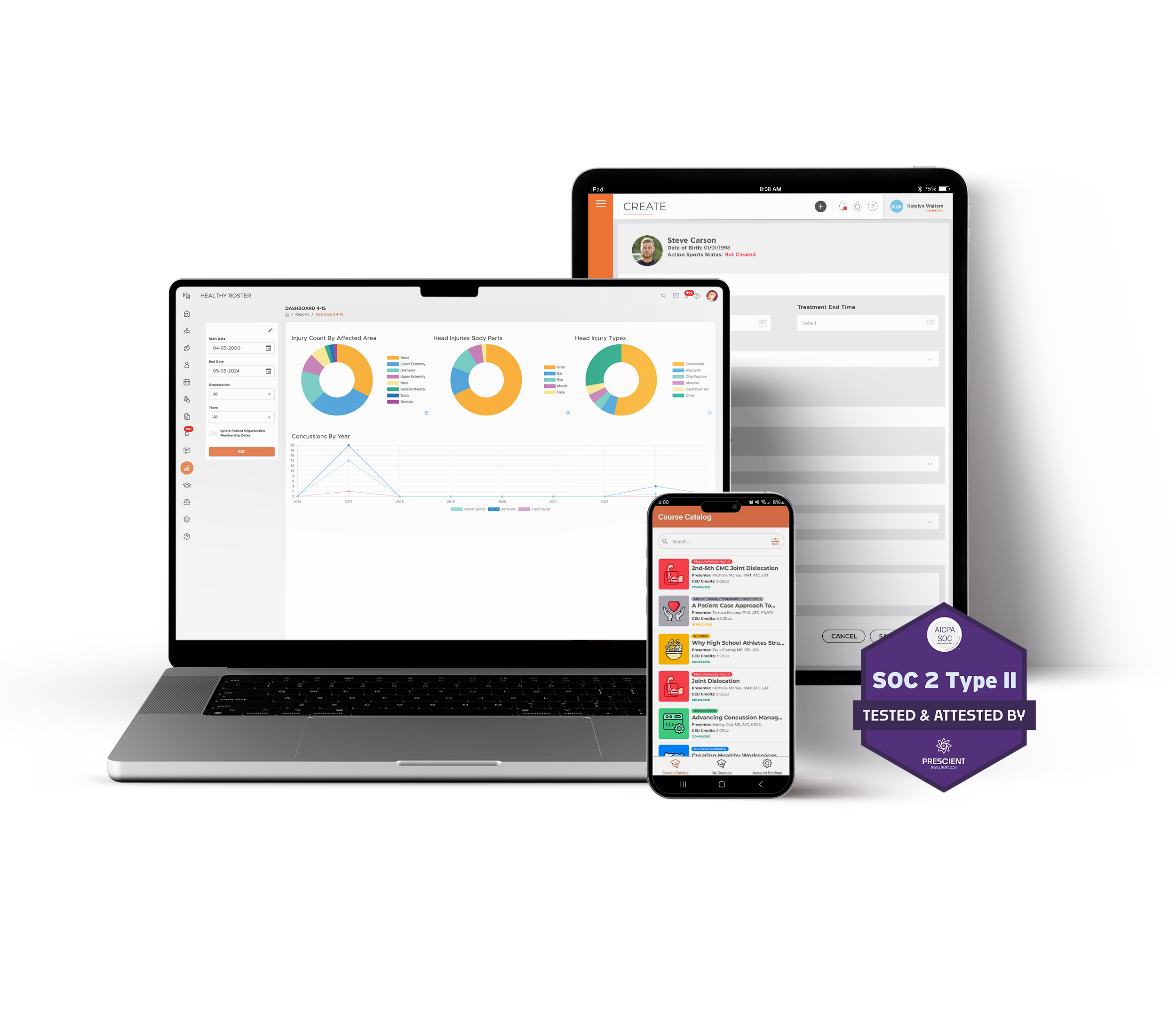
Yes, most modern Athletic Training EMRs are designed to be mobile-friendly or mobile-first. This allows Athletic Trainers to document injuries, treatments, and notes directly from the field, training room, or anywhere they are working.
Do I need WiFi to use an EMR?
This depends on the platform. Some systems require an internet connection, while others offer offline capabilities and sync data when a connection is available. Mobile-first systems are typically designed with flexibility in mind.
How does an EMR help with documentation?
An EMR simplifies documentation by providing structured forms, templates, and centralized records. It reduces duplicate entry, improves consistency, and makes it easier to track injuries and treatments over time.
Does an EMR improve communication with athletes and parents?
Yes. Many Athletic Training EMRs include built-in communication tools that allow secure messaging with athletes, parents, coaches, and other staff. This reduces reliance on personal texts and emails.
Is Athletic Training EMR software HIPAA compliant?
Most reputable EMR systems are designed to meet HIPAA requirements for protecting health information. It’s important to confirm that any platform you choose includes secure data storage, access controls, and proper compliance measures.
How long does it take to get started with an EMR?
Implementation time can vary, but many Athletic Training EMR systems can be set up relatively quickly, especially those designed for ease of use. Training, onboarding, and data setup will impact how quickly a program is fully up and running.
What features should I look for in an Athletic Training EMR?
Key features to look for include injury tracking, treatment documentation, mobile access, communication tools, reporting capabilities, and ease of use. The best system should match your daily workflow and reduce time spent on administrative tasks.
Can an EMR help reduce risk and improve compliance?
Yes. Consistent, accurate documentation helps protect both the athlete and the Athletic Trainer. EMRs make it easier to maintain complete records, which can be important for compliance and liability purposes.
What types of organizations use Athletic Training EMRs?
Athletic Training EMRs are used by high schools, colleges, clinics, and industrial or tactical programs. Each setting may use the system differently, but all benefit from improved organization and documentation.
How do I choose the right Athletic Training EMR?
Choosing the right EMR depends on your needs. Consider ease of use, mobile functionality, communication features, support, and pricing. It’s also helpful to see the system in action and evaluate how it fits your workflow.
What are the alternatives to using an EMR?
Some programs still use paper records or spreadsheets, but these methods are less efficient, harder to manage, and more prone to errors. An EMR provides a more organized and scalable solution.
Will an EMR actually save me time?
Yes. Many Athletic Trainers find that an EMR reduces documentation time by streamlining workflows and eliminating repetitive tasks. Over time, this can save hours each week.
Can I customize an Athletic Training EMR to fit my workflow?
Many EMR systems allow customization of forms, workflows, and reporting. This helps ensure the system fits your specific needs rather than forcing you to adapt to rigid processes.
What should I do next if I’m considering an EMR?
The next step is to evaluate your current workflow, identify your biggest challenges, and compare EMR options. Seeing a system in action can help you understand how it will work in your day-to-day environment.
Learn More About Athletic Training EMR Solutions
If you’re exploring Athletic Training EMR options, it’s helpful to compare features, understand pricing, and see how different systems support your workflow.
Talk to us about how
we help you!
Healthy Roster is a mobile-first EMR built specifically for Athletic Trainers, designed to simplify documentation, improve communication, and help you stay organized—whether you’re on the field, in the training room, or on the go.
If you’re evaluating EMR options, the next step is to see how a system works in real-world use.